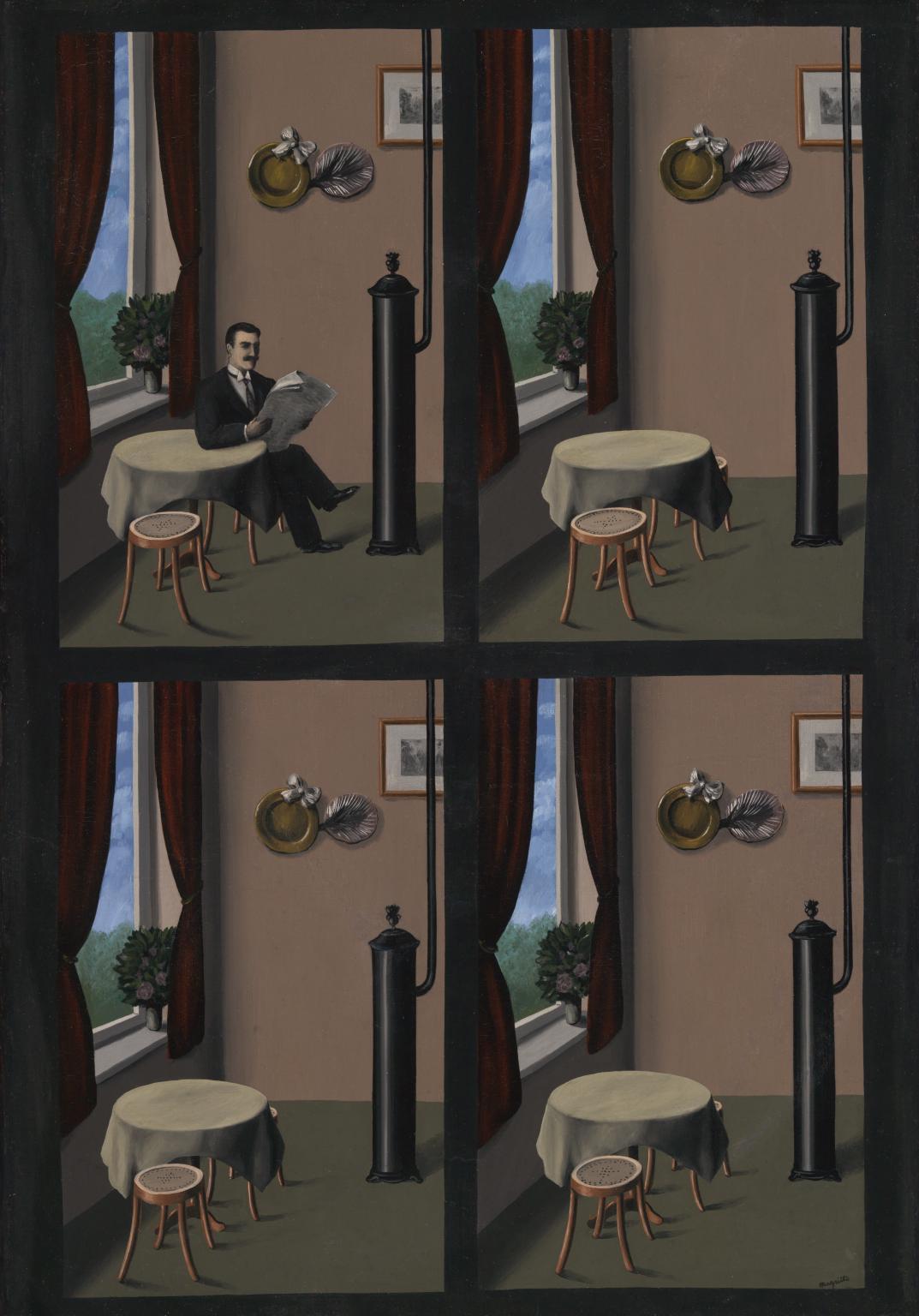
Zones Without People, A Horror Film
Purposelessness is threatening, and an empty room is purposeless. Its infinite lack of justification is an inversion of our everyday reality. If a filled room is form, then an empty room is void; other. We take for granted that most places are meant to have people in them, but why? Does it need to be so?
Zones Without People, A Horror Film takes advantage of the striking proof-of-concept offered by The Kennedy Museum's exhibition space and its situation within an otherwise empty, ailing building. The show functions as a philosophical spectacle, a piece of investigation that comes across as much on an intuitive, narrative level as an analytical, interrogative one.
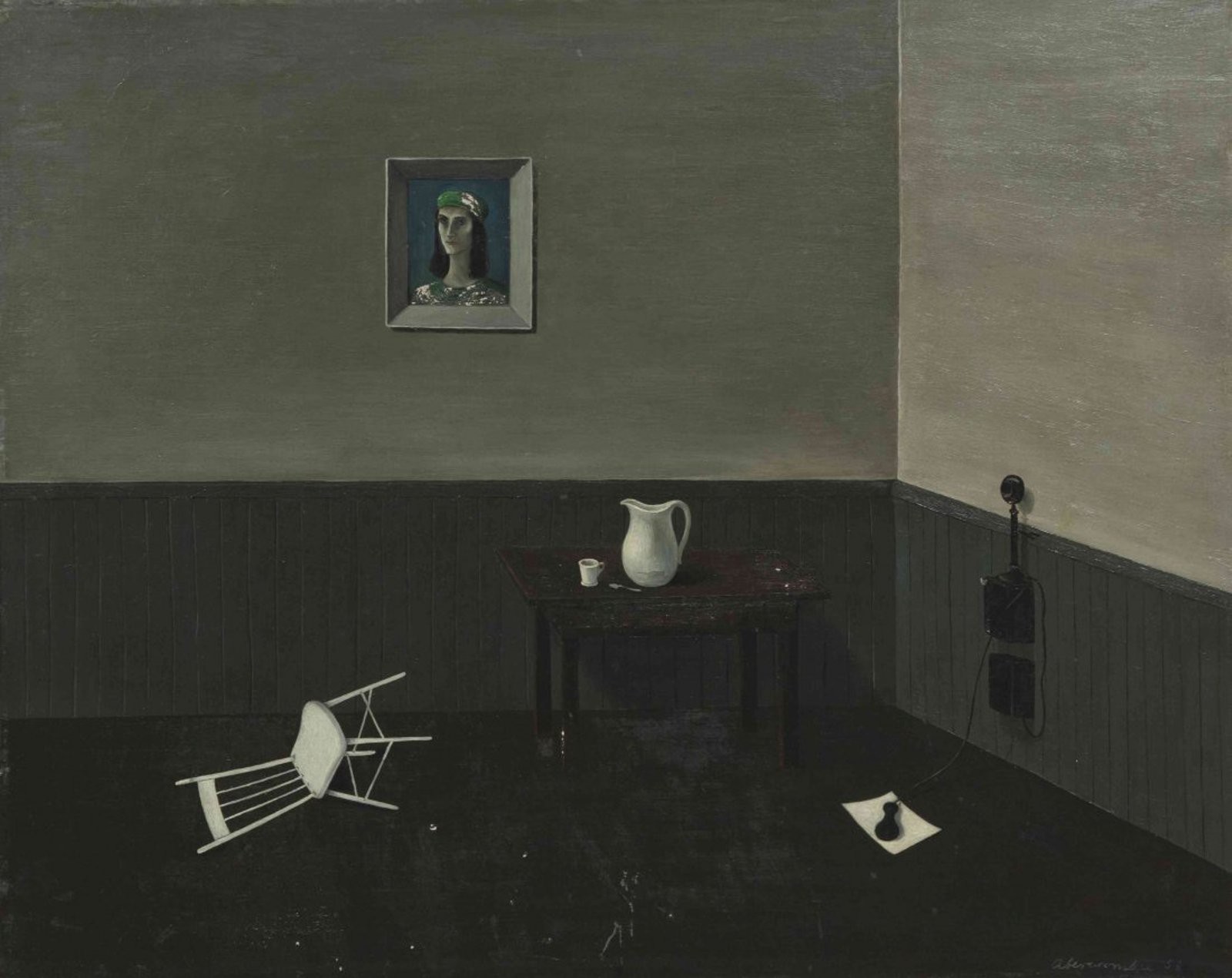
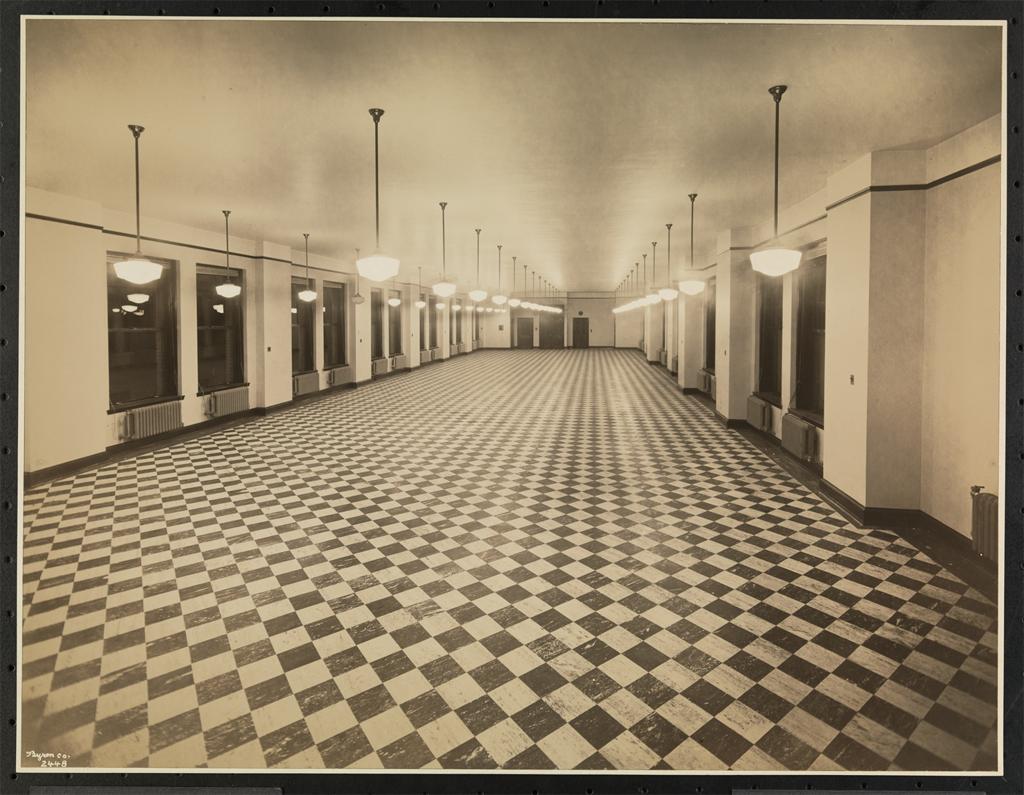
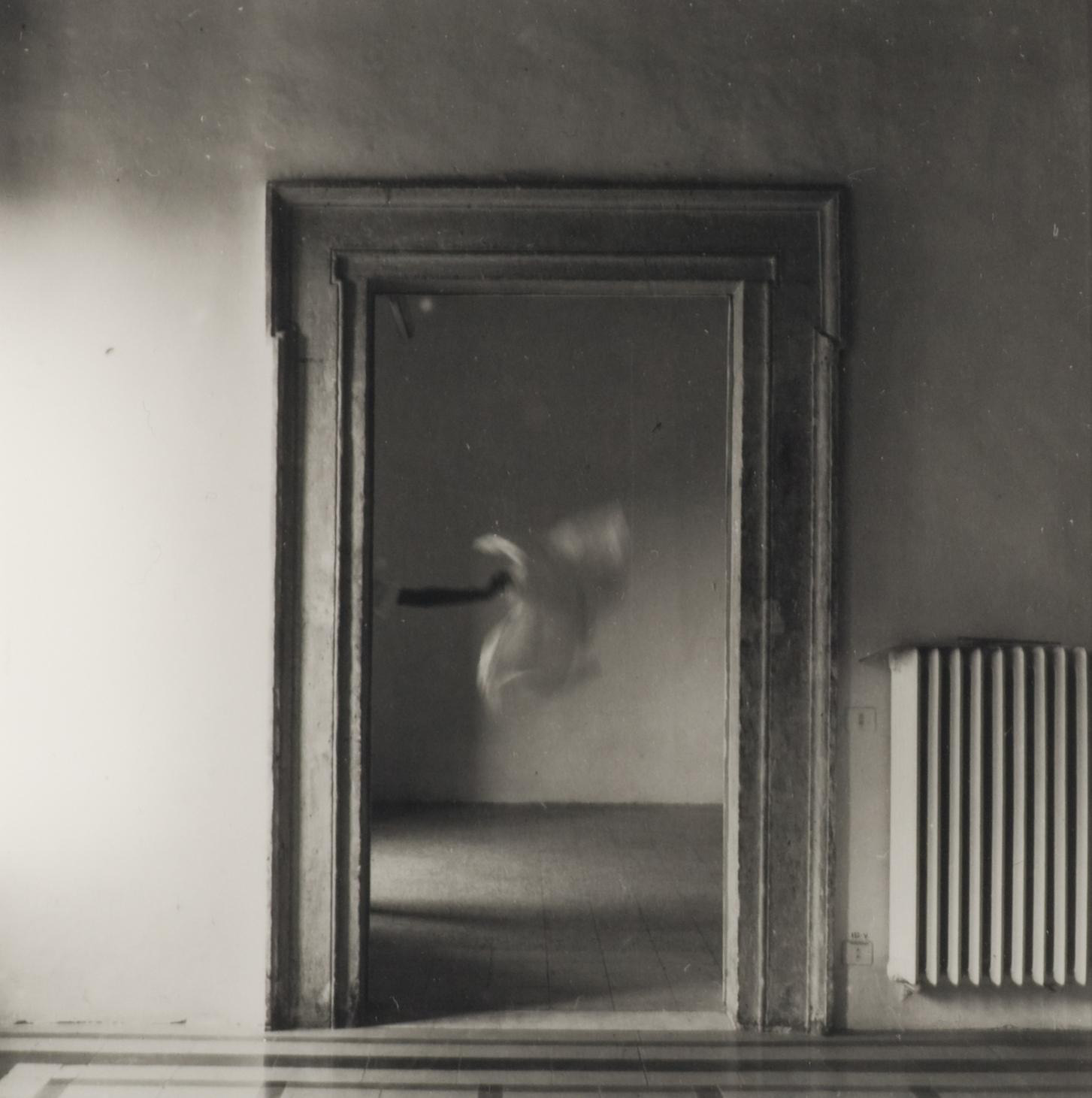
Considering the prevalence of the empty room as a point of artistic interest, we are confronted with vacuums in the surreal spaces and landscapes of Gertrude Abercrombie, the ghostly ruins of Francesca Woodman, and the empty corridors and banquet halls of the Byron Company's archival New York, among others.
These discomfiting views carry the viewer along in a cinematic composition: hence, A Horror Film. Supplementing introductory text, the motives in the displayed works (including, budget notwithstanding, Magritte's Man With Newspaper, 1928) naturally conjure the anthropological questions named in the introduction: What, if anything, is amiss in an empty room? In the modern context, where our options for managing objects and space are only either occupation or instrumentalization, such brazen pointlessness is an unallowable affront to rationality. It is fitting, then, that emptiness is a favored motif of surrealists and provocateurs.
In the case of Abercrombie's White Chair, for instance, the scene would not be half as strange if at least one person was left standing in the void. If we look at the images in the show and worry, "Well, where's the content?," then the point is proven. Emptiness is imagined as incompleteness: we wait for something to enter, to make the space useful and interesting. But the works in Zones Without People, A Horror Film beg to differ. A void is enough.
In the unrealized exhibitions that I have developed myself, such as Zones Without People, or the (soon-to-be) realized exhibitions to which I've contributed, my curatorial focus has always leaned strongly on the metaphysical, mobilizing art's potential to expand, explore, and summarize complexities. I avoid, however, impenetrable art-speak and erudition in favor of openness, ensuring any viewer can get swept up in the narrative of the show.
If a picture is worth a thousand words, then an art exhibition is a suitable stand-in for reams of scholarship. Zones Without People, like Moderna Museet's Mud Muses or Livet självt, or Elizabeth Price's Hayward exhibition In A Dream…, initiates a philosophical exercise through cinematic practice.