The Arctic is the Key to Understanding Trump II
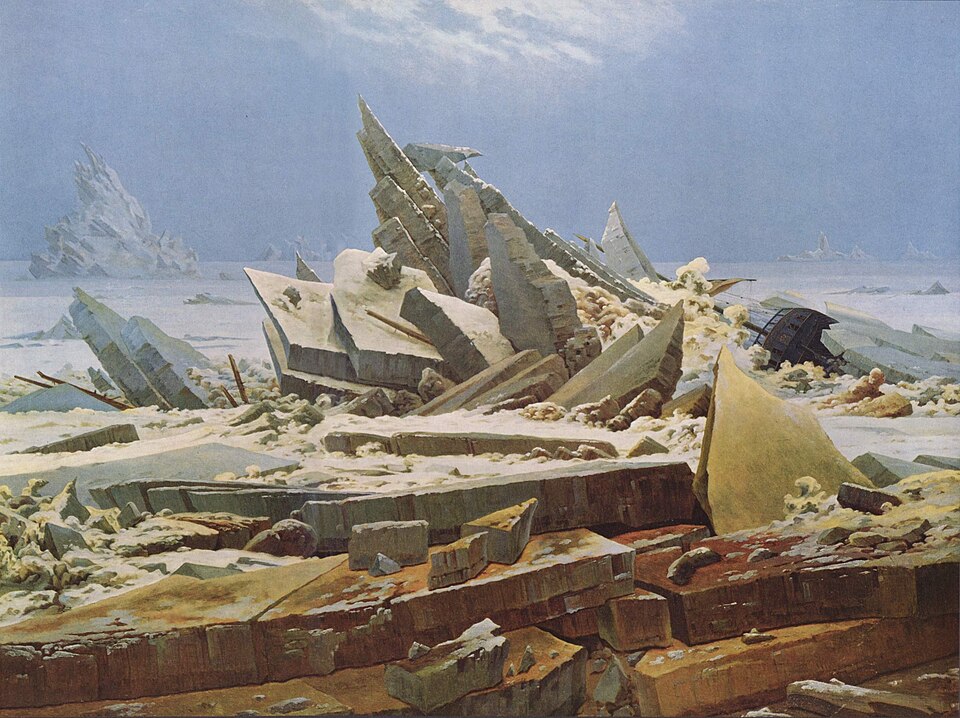
Here's a fun mental exercise: what connects America, Russia, China, climate change, global commerce, and the future of great power conflict? Alright, you read the title, so you already know my answer. And now, what if that answer—control of the Arctic—is also the proper lens through which to view the "totally crazy, totally incomprehensible" reign of Trump II and make it scrutable, even wise? Today, I'm going to make that case.
A caveat before we begin. When you have a hammer, everything looks like a nail. I am about to hand you my hammer. The interpretive framework I'm proposing explains a lot, but it doesn't explain everything, and I am not suggesting that every decision emanating from Washington is part of some grand Arctic chess game. Some (most?) of it is probably just chaos. Some (all?) of it is probably just ego. But I do think there's a cohesive strategic logic operating beneath the surface noise that deserves articulation.
The Future
The Arctic is warming at four times the global average. This is a tragedy. But for the hawks, it is also an opportunity of the kind that reshapes the global order. Sea ice that once made the region impassable is retreating, opening shipping routes that shave weeks off transit times between Asia and Europe. What was frozen frontier is becoming the world's newest ocean.
Beneath that melting ice lies an estimated 13% of the world's undiscovered oil, 30% of undiscovered natural gas, and vast deposits of the rare earth minerals that power the modern economy. The Northern Sea Route, once icebound for most of the year, now sees commercial shipping seasons approaching five months, with transit traffic steadily increasing year over year. We are talking about enormous potential value in shipping, resource extraction, and new industrial development. Those nations that position themselves properly now will harvest this wealth for generations. Those that don't will watch it flow to others.
On infrastructure: Russia had 57 major icebreakers and ice-capable patrol ships as of 2022, with more under construction. America's operational polar fleet consists of one heavy icebreaker and two medium icebreakers, after Storis entered service in 2025, and is scrambling to build or buy even more. Russia has reopened or built over a dozen military bases across its Arctic territory. America's Arctic presence has been, until recently, an afterthought. China, which of course has no Arctic coastline whatsoever, recently declared itself a "near-Arctic state" and is investing tens of billions in what it calls the "Polar Silk Road." The great powers are positioning for a contest that people are only very slowly realizing is happening. The prize for that contest is the last great industrial frontier on Earth.
This context helps make sense of what otherwise appears senseless.
The Folly
In 1867, Secretary of State William Seward purchased Alaska from Russia for $7.2 million, about two cents per acre. Critics called it "Seward's Folly" and gave Alaska nicknames like "Walrussia" and "Johnson's Polar Bear Garden." The New York Tribune dismissed it as a "Quixotic land-hunt." Who would want to buy a frozen wasteland of no conceivable value, and at such cost? The Senate nearly rejected the treaty. Seward was mocked relentlessly for wasting public money on ice and polar bears.
Today, Alaska is America's only significant foothold in the Arctic. Its strategic value is extremely high for defense, but even higher as the gateway to and pretext for operating in the polar north over the coming century. Seward saw what others couldn't: that the shape of the future was not yet fixed, and that seemingly worthless territory might prove essential someday, somehow. He was ridiculed for it, but he was right.
Trump's interest in Greenland follows a similar pattern. He first proposed purchasing it from Denmark in August 2019. When Prime Minister Mette Frederiksen (and everyone else) called it "absurd," he canceled a planned state visit in retaliation. The press mocked it as whim. But he's returned to it repeatedly, with increasing intensity. This suggests strategic intent rather than mere impulse.
You could easily call Trump's moves on Greenland "Trump's Folly." One of many, at that. The parallels are obvious: the ambitious territorial moves, the willingness to be called crazy, the bet on a future that most people can't see yet. Whether this turns out to be Seward's (Trump's) wisdom or something else entirely, we won't know for decades. But the parallel is worth holding in mind.
The Summit
On August 15, 2025, Trump welcomed Putin to Joint Base Elmendorf-Richardson in Anchorage. Red carpet. Fighter jets lined up for the photo op. Putin's first visit to American soil in over a decade. For a few days, this was the biggest story in the world, but for all the wrong reasons.
To the public, the summit was framed as being about Ukraine. The media covered it as a peace negotiation. But here's what actually happened on the ground: Putin arrived with a business delegation led by Kirill Dmitriev, head of Russia's sovereign wealth fund. Trump brought Commerce Secretary Howard Lutnick and Treasury Secretary Scott Bessent. As Angela Stent detailed for Brookings, the administration had previously dangled the prospect of Russia investing in Alaskan oil and joint Russian-American rare earth mineral exploration. This was not a peace summit with economic sweeteners. It was an economic summit with peace as the prerequisite.
The transactional structure was clear: Arctic cooperation would be the carrot for Russian concessions on Ukraine. The peace plan that emerged stated it directly: long-term economic partnership in energy, natural resources, and "rare earth metal extraction projects in the Arctic." But because there was no agreement on ending the war, the U.S. side declined to finalize the business deals. The two tracks were linked, and when one collapsed, both did.
The summit lasted 3.5 hours instead of the planned six. The joint lunch was skipped. (Someone left the attendee list and menu on a hotel printer.) No deals were announced. Putin wanted legitimization of his territorial gains without meaningful concessions. Trump offered partnership contingent on terms Putin wouldn't accept. The grand Arctic bargain collapsed, and with it, the relationship. By October, new sanctions on Russian oil companies. By winter, the rhetoric of adversaries again.
But to me, the structure of this summit reveals the logic. The public saw a failed attempt at peace. What actually failed was a clear bid to realign great power relations around shared Arctic interests, using Ukraine as the unlocking mechanism. Even if it didn't work in this first iteration, the fact that it was tried at all tells us something important about what the administration thinks matters. And don't take Trump for a quitter.
The Batteries
Let me take a quick detour. The phone in your pocket contains about 30 different elements like cobalt, lithium, neodymium, and dysprosium. These come from supply chains that most of us never think about. China accounts for approximately 60% of mined magnet rare earths and 91% of refined output. This isn't because they have all the deposits; it's because they spent decades building the processing infrastructure while everyone else focused on other things.
This matters because rare earths aren't just in phones. They're in electric vehicles, wind turbines, missile guidance systems, and fighter jets. The entire green energy transition and a not-insignificant portion of modern defense capability depends on minerals that flow through Chinese hands. The global rare earth market, currently valued at around $8 billion annually, is projected to reach almost $16 billion by 2030 as EV and renewable energy demand explodes. But that's just the ores and unrefined materials themselves; not the industries that depend on them. Without rare earths: no electric vehicles, no wind turbines, no smartphones, no precision-guided weapons. The industries that depend on these materials are worth tens of trillions and can be considered the bulk of any future global economy.
Greenland alone contains 25 of 34 critical minerals on the European Commission's list. The Arctic, broadly, contains much of the rest. When I see the administration pressuring Denmark over Greenland, I don't just see territorial ambition or wounded ego. I see a recognition, however clumsily expressed, that the physical substrates of 21st-century power are not evenly distributed, and that whoever controls them controls more than rocks. The methods are painfully, obviously wrong, but the underlying anxiety is not irrational. America and the West writ large have built a civilization on materials we don't control, and that's a problem whether or not we like the people pointing it out.
The Story
Once you accept the Arctic as an organizing principle, other things click into place. The pressure campaign against Canada wasn't just about tariffs; Canada's northern territories are central to Arctic shipping and resource access. The courtship of Russia wasn't just about ending the Ukraine war; Russia has the only infrastructure capable of operating in Arctic conditions year-round. The threats against NATO allies weren't random provocations; they targeted the nations standing between America and Arctic resources.
I want to be careful here. I am not arguing that every tweet, every tariff, every insult fits neatly into this framework. Some of it is surely impulse. Some of it is surely performance. But I am arguing that there is a strategic logic underneath; a bet that Arctic control will define 21st-century power, and that traditional alliances and institutional norms are obstacles to be overcome rather than assets to be preserved.
This is a coherent worldview. You don't have to agree with it to recognize how cleanly it fits together. The postwar American approach assumed that stable alliances and rules-based order served American interests, while the current approach assumes the opposite: that American interests are best served through direct control, bilateral deals, and the willingness to coerce with force anyone who stands in the way. The Arctic is where this theory meets reality.
What makes this moment so urgent is that the window for positioning is closing. Russia has been building Arctic infrastructure for two decades. China is spending at a pace America cannot currently match. The nations that establish footholds in ports, icebreaker fleets, extraction rights, and military presence will have structural advantages that compound over time. First-mover advantages in resource extraction are notoriously durable. The oil fields you control, the shipping routes you secure, the processing facilities you build—these create facts on the ground that are extraordinarily difficult to reverse. The next two decades will see the emergence of an entirely new theater of global commerce and competition. The Arctic is not a sideshow. It is the next century's main event.

Conclusion
To close: This Arctic explanation is compelling, but compelling explanations are dangerous. They can make us see patterns where none exist, coherence where there is only chaos. Maybe this is all just ego and impulse dressed up in strategic clothing by someone (me) who can't accept that the world might be governed by embarrassingly imperfect, irrational actors. Maybe the real explanation is simpler and sadder: that power and greed come first, and the justifications as purely post-facto.
But I don't think so. I think the Arctic matters in ways that most of us haven't internalized yet. I think the Trump II administration has recognized this. And I think that decades from now, we'll look back at this period and see it as the moment when the great powers began their contest for the last unclaimed space on Earth—a space containing more extractable wealth than any region opened to exploitation since the Americas themselves.
Whether that contest is managed wisely or catastrophically remains to be seen. The early returns are not encouraging. But the contest itself is real, and pretending otherwise won't make it go away. The ice is melting. The routes are opening. The minerals are there. And whoever controls them will shape the century to come.
Wherever this leads, it's clear Seward was on to something.